

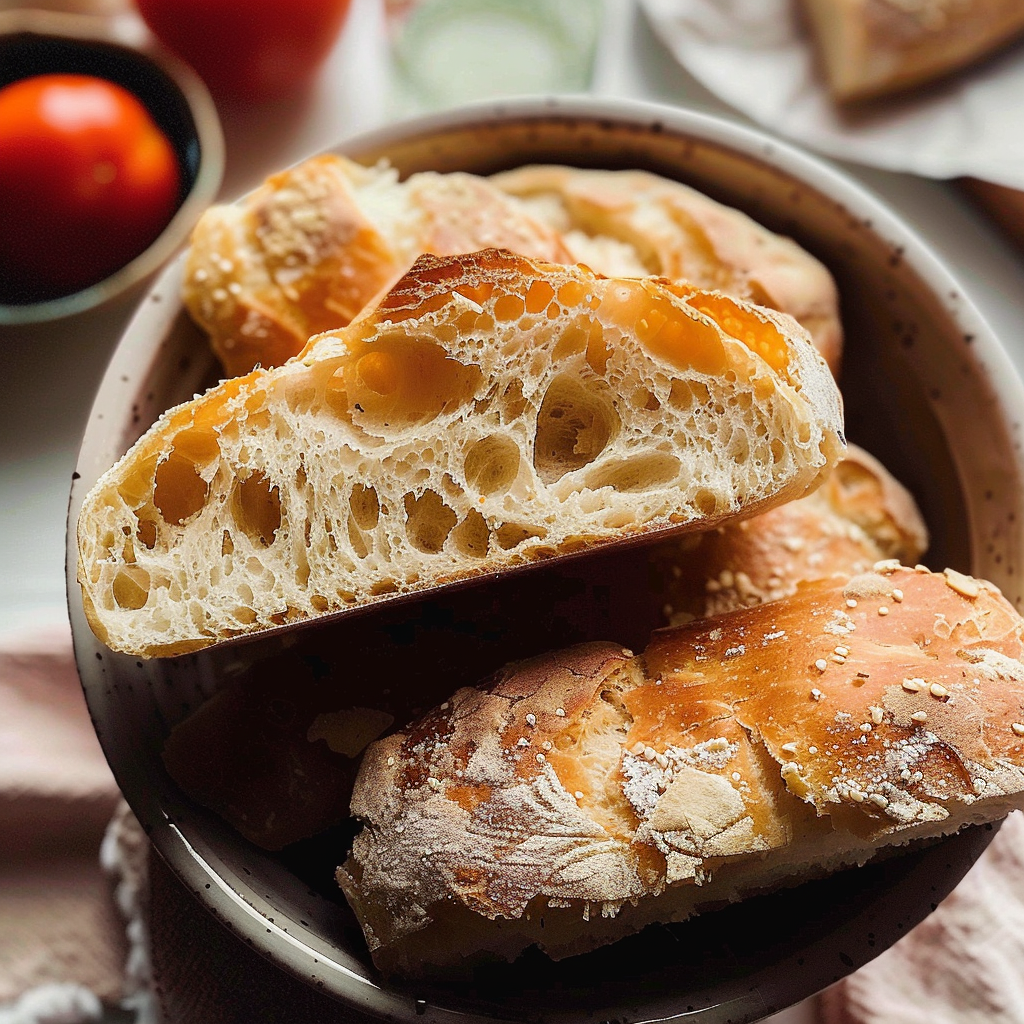

The aroma of freshly baked Ciabatta Bread wafts through the air, inviting you to indulge in its crusty exterior and soft, chewy interior. This Italian delight is not just a loaf; it’s an experience that takes your taste buds on a whirlwind journey through the sun-kissed hills of Tuscany. Imagine slicing into a warm loaf, steam escaping as you reveal the airy pockets inside, perfect for soaking up olive oil or slathering with butter. For more inspiration, check out this Garlic Butter Lobster Tail recipe.
Now, let me take you on a little adventure. I remember the first time I attempted to make Ciabatta Bread. Picture this: flour flying everywhere, my dog eyeing the mess like it was a new play area, and me desperately trying to figure out why my dough looked more like pancake batter than bread dough. But oh, when that loaf finally emerged from the oven, golden and glorious! It was love at first bite, and the kitchen disaster faded into a distant memory.
Why You'll Love This Ciabatta Bread
- This amazing Ciabatta Bread offers more than just flavor; it makes meal prep a breeze.
- You can easily customize the ingredients based on what you have on hand.
- The vibrant colors and aromas make it visually stunning on any dinner table.
- Perfect for grilling but versatile enough for baking or pan-searing.
Ingredients for Ciabatta Bread
Here’s what you’ll need to make this delicious Ciabatta Bread:
- All-Purpose Flour: The backbone of your bread; choose high-quality flour for the best texture.
- Warm Water: About 110°F (43°C) – this helps activate the yeast for that perfect rise.
- Active Dry Yeast: Ensure it’s fresh; otherwise, your bread may stay flatter than your hopes on a Monday morning.
- Olive Oil: Adds richness and flavor; extra virgin is ideal for that Mediterranean touch.
- Salt: Just enough to enhance all those wonderful flavors without overpowering them.
The full ingredients list, including measurements, is provided in the recipe card directly below.
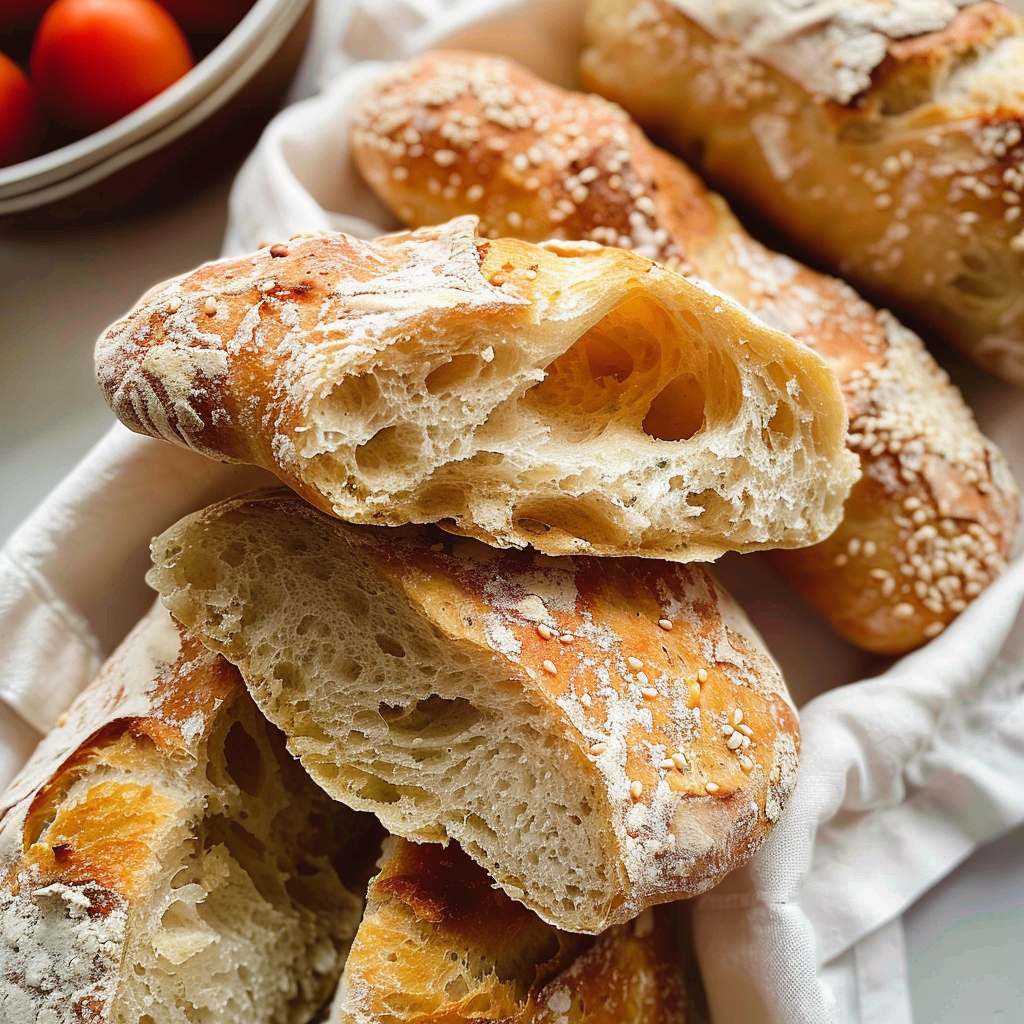
How to Make Ciabatta Bread
Follow these simple steps to prepare this delicious Ciabatta Bread:
Step 1: Activate the Yeast
In a small bowl, mix warm water and active dry yeast together. Let it sit for about five minutes until it’s frothy like a cappuccino—this means your yeast is alive and ready to party.
Step 2: Mix the Dough
In a large mixing bowl, combine all-purpose flour and salt. Then pour in your activated yeast mixture along with olive oil. Stir until combined; don’t worry if it looks messy—that’s part of its charm!
Step 3: Knead Away
Transfer your dough onto a floured surface and knead it for about ten minutes until it’s smooth and elastic. Pretend you’re giving it an enthusiastic massage—it deserves it after all that hard work.
Step 4: Let It Rise
Place your dough in a lightly greased bowl, cover with a damp cloth, and let it rise in a warm spot until it doubles in size—about one hour. You can use this time to clean up that flour explosion if you’re feeling ambitious.
Step 5: Shape Your Loaves
Once risen, gently deflate the dough on a floured surface and divide it into two equal portions. Shape each portion into rustic loaves by stretching and folding—not too much pressure here; we want those lovely air pockets!
Step 6: Bake to Perfection
Preheat your oven to 425°F (220°C). Place your shaped loaves on a baking sheet lined with parchment paper and let them rest for another thirty minutes while you twiddle your thumbs in anticipation. Bake for about twenty-five minutes until golden brown—your home will smell heavenly!
Transfer to plates and drizzle with olive oil or serve alongside soup for the perfect finishing touch.
And there you have it—the magic of homemade Ciabatta Bread! So next time you’re looking to impress at dinner or simply want some delicious carbs all to yourself (who are we kidding?), whip up this recipe! Your taste buds will thank you—and so will your friends when they catch wind of those bakery-style loaves coming from your kitchen! savory frittata recipe.
You Must Know About Ciabatta Bread
- This amazing Ciabatta Bread offers more than just flavor; it makes meal prep a breeze.
- You can easily customize the ingredients based on what you have on hand.
- The vibrant colors and aromas make it visually stunning on any dinner table.
- Perfect for grilling but versatile enough for baking or pan-searing.
Perfecting Ciabatta Bread Cooking Process
To achieve perfect Ciabatta Bread, start by mixing your dough ingredients first. Let them rest to develop gluten, then shape and rise again before baking. This sequence ensures you get that delightful chewy texture we love. For more inspiration, check out this Amish Country Casserole recipe.
Add Your Touch to Ciabatta Bread
Feel free to swap out traditional flour with whole wheat for a healthier option or add herbs like rosemary for extra flavor. You can even toss in olives or sun-dried tomatoes to make it your own!
Storing & Reheating Ciabatta Bread
Store your Ciabatta Bread in a paper bag at room temperature for up to two days. For longer storage, wrap it tightly in plastic and freeze. To reheat, simply pop it in the oven until warmed through.
Chef's Helpful Tips for Ciabatta Bread
- This amazing Ciabatta Bread offers more than just flavor; it makes meal prep a breeze.
- You can easily customize the ingredients based on what you have on hand.
- The vibrant colors and aromas make it visually stunning on any dinner table.
- Perfect for grilling but versatile enough for baking or pan-searing.
Using room temperature water helps the yeast activate better, leading to a fluffier loaf.
Don’t rush the rising process; patience is key—let that dough rise until doubled in size for optimal texture.
Avoid using too much flour while shaping because it can lead to dense bread instead of that airy goodness we all crave.
Baking this Ciabatta Bread always reminds me of family get-togethers where everyone gathered around the kitchen, sharing stories and laughter over warm slices fresh from the oven.
FAQs About Ciabatta Bread
What is Ciabatta Bread?
Ciabatta bread is a traditional Italian loaf known for its rustic appearance and airy texture. Made from a simple mixture of flour, water, yeast, and salt, this bread features a crispy crust and a soft, open crumb. Its name translates to “slipper” in Italian, reflecting its flat shape. Ciabatta is often used for sandwiches due to its ability to hold fillings without becoming soggy, making it a favorite in cafes and homes alike.
How do I store Ciabatta Bread?
To keep your ciabatta bread fresh, store it at room temperature in a paper bag or wrapped in a clean kitchen towel. Avoid plastic bags as they can trap moisture and lead to a soggy loaf. For longer storage, consider slicing the bread and freezing it. When ready to enjoy, simply toast or warm the slices to restore their delightful texture and flavor.
Can I make gluten-free Ciabatta Bread?
Yes, you can make gluten-free ciabatta bread using alternative flours such as almond flour or rice flour combined with xanthan gum for texture. While the flavor may differ slightly from traditional ciabatta, many recipes yield delicious results that capture the essence of this beloved bread. Experimenting with different gluten-free blends can help achieve the desired taste and consistency.
What dishes pair well with Ciabatta Bread?
Ciabatta bread pairs beautifully with various dishes, enhancing meals with its unique flavor. Use it for creating gourmet sandwiches filled with meats, cheeses, and fresh vegetables. It also works well as an accompaniment to soups and stews, soaking up delicious broths. Additionally, consider serving ciabatta alongside dips like hummus or olive oil for an elegant appetizer option at gatherings.
Conclusion for Ciabatta Bread
In conclusion, ciabatta bread stands out as a versatile and flavorful addition to any meal. With its crisp crust and soft interior, it’s perfect for sandwiches or enjoyed alongside soups. Storing ciabatta properly ensures you maintain its delightful texture over time. perfect pairing for ciabatta Whether you’re exploring gluten-free alternatives or looking for ideal pairings, ciabatta bread can elevate your culinary experience. pumpkin spice variations Embrace the charm of ciabatta bread in your cooking today!
Ciabatta Bread
Ciabatta Bread is a rustic Italian loaf that boasts a crispy crust and an airy, chewy interior. This delightful bread is perfect for sandwiches, dipping in olive oil, or simply enjoying warm alongside your favorite soup. With just a handful of simple ingredients and straightforward techniques, you can create this bakery-style bread right in your own kitchen, impressing family and friends with its fresh aroma and delicious taste.
- Prep Time: 20 minutes
- Cook Time: 25 minutes
- Total Time: 45 minutes
- Yield: About 12 servings 1x
- Category: Bread
- Method: Baking
- Cuisine: Italian
Ingredients
- 4 cups all-purpose flour (500g)
- 1 ½ cups warm water (110°F/43°C) (360ml)
- 2 tsp active dry yeast (7g)
- 2 tbsp olive oil (30ml)
- 2 tsp salt (10g)
Instructions
- In a small bowl, mix warm water and active dry yeast; let sit until frothy (about 5 minutes).
- In a large mixing bowl, combine flour and salt; add the yeast mixture along with olive oil. Stir until combined.
- Knead the dough on a floured surface for about 10 minutes until smooth and elastic.
- Place the dough in a greased bowl, cover it with a damp cloth, and let it rise in a warm spot until doubled in size (about 1 hour).
- After rising, gently deflate the dough, divide it into two equal portions, and shape into loaves. Let rise for another 30 minutes.
- Preheat your oven to 425°F (220°C). Bake the loaves on a parchment-lined baking sheet for about 25 minutes or until golden brown.
Nutrition
- Serving Size: 1 serving
- Calories: 130
- Sugar: 0g
- Sodium: 210mg
- Fat: 2g
- Saturated Fat: 0g
- Unsaturated Fat: 1g
- Trans Fat: 0g
- Carbohydrates: 25g
- Fiber: 1g
- Protein: 4g
- Cholesterol: 0mg


Leave a Comment